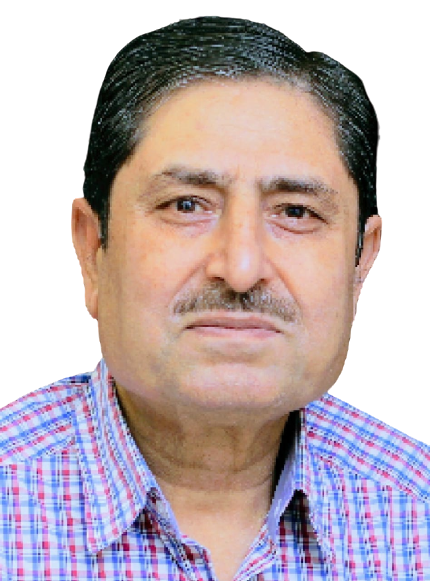
By Rajinder Premi
For over three decades, the wounds of a front-line victim of terrorism in Kashmir remain raw, unhealed, and ignored. The tearful saga of my family, a Kashmiri Pandit household devastated by violence, continues to echo through the corridors of time, unanswered by the successive governments that promised solace but delivered only silence. Thirty-five years after being forcibly displaced, the pain of losing loved ones, homes, and a way of life lingers, compounded by the indifference of those in power. Will justice ever be restored, or will our cries remain forever unheard?
In the early days of the insurgency in Kashmir, our family became a tragic emblem of the Kashmiri Pandit exodus. The brutal martyrdom of my father Sarwanand Koul Premi and younger brother at the hands of militants left us reeling. Forced to flee our ancestral village for safety, we abandoned our homes, our hearth, and our heritage. The militants didn’t stop at taking lives, they looted our property, leaving us near-destitute. Our ancestral homes and cowshed were reduced to ashes in August 1998, and our local temple, a symbol of our community’s spirit, was desecrated and burned in December 1992. As the sole Kashmiri Pandit family in our village, we bore the brunt of targeted violence, our lives upended by an ideology that sought to erase us.
The trauma fractured our once-close-knit family. My younger brother’s widow, Usha, was left to raise their one-and-a-half-year-old daughter, Promila, alone. Usha found employment in the Telecom Department to support herself, retiring years later, while Promila, now married for five years, carries the weight of a childhood marked by loss. Two of my elder uncles succumbed to the shock of these events, passing away in Jammu during that year of tragedy. The devastation was total emotional, financial, and cultural.
The governments, both state and central, have offered little more than lip service. From the moment tragedy struck, officials visited, expressed sympathy, and made lofty promises of rehabilitation and justice. Yet, nothing materialized. Our case, one of the most prominent among Kashmiri Pandit victims of terrorism, was met with bureaucratic apathy. The murderers of my father and brother remain free, the case closed as “untraced” in 1992, as coldly communicated by the Deputy Inspector General of South Kashmir Range, Anantnag. The looted property was never recovered, and the destruction of our homes went unaddressed.
We rebuilt our lives from scratch, fueled by resilience but haunted by memories. The government’s callous approach, treating our case as just another file in the bureaucratic maze, rubbed salt into our wounds. We were not asking for rewards; we sought only the dignity and justice owed to a family that suffered for its loyalty to the nation. As I reflect, I wonder: Can any compensation truly make up for the loss of loved ones? Perhaps not. But the government could have honored its promises, relaxed rigid rules, and shown the human touch our case demanded.
In 1994, determined to seek accountability, I penned a four-page handwritten letter to the National Human Rights Commission (NHRC). Detailing the atrocities, genocide, and ethnic cleansing faced by my community, I pleaded for preventive, punitive, and restorative measures. The NHRC took suo-motu cognizance, granting me an audience with Justices Ranga Nath Mishra, S.S. Kang, and B.B. Fatima in the sweltering June of 1994. My arguments on the denial, deprivation, and discrimination faced by Kashmiri Pandits were later clubbed with petitions from the All India Kashmiri Samaj and Panun Kashmir Movement. In 1999, the NHRC commended my submission on genocide, a small but significant acknowledgment of our pain.
In 2008, the NHRC transferred our family’s case to the Jammu & Kashmir State Human Rights Commission (SHRC), urging speedy resolution. After four years of hearings, the SHRC delivered a landmark verdict on February 22, 2012 the first of its kind in a Kashmiri Pandit case, directing the state government to redress our grievances “sooner the better.” High-level meetings followed, chaired by the Principal Secretary to the Chief Minister, the Financial Commissioner, the Chief Secretary, and even the Governor’s advisor in 2018. Yet, the SHRC’s recommendations and the government’s decisions remained confined to paper, unimplemented and ignored.
Undeterred, I filed another petition with the NHRC on July 15, 2020, seeking enforcement of the SHRC’s 2012 verdict. The NHRC responded swiftly, directing the Jammu & Kashmir Union Territory government on August 30, 2020, to submit an action-taken report within four weeks. When the government failed to comply, the NHRC issued a final reminder on October 16, 2020, threatening coercive action under Section 13 of the Protection of Human Rights Act, 1993, including summoning the Chief Secretary. The November 23, 2020, deadline came and went, met with “criminal silence” from the UT administration.
On December 21, 2020, the NHRC ordered the Chief Secretary to appear personally, expressing dismay at the government’s disregard for its authority. The UT government, in a bid to delay, requested the matter be held in abeyance pending a decision from the Jammu & Kashmir High Court. My family protested, clarifying on April 15, 2024, that the High Court had neither issued a notice to the NHRC nor stayed its proceedings. On April 18, 2024, the NHRC issued its final directive, ordering the Jammu & Kashmir government to implement the SHRC’s 2012 recommendations in full, with a compliance report due within eight weeks.
The High Court, in its ruling on May 2, 2024 (WP(C) No. 1431/2021), declared the matter resolved, as the NHRC had closed the case in our favor. The UT government formed a committee, headed by the Principal Secretary of the Home Department, to recommend measures for justice within eight weeks. Yet, over a year later, we await action. The committee has met multiple times, deliberating on the SHRC and NHRC directives, but the family remains in limbo, clinging to hope.
Our struggle is not just for compensation but for dignity, acknowledgment, and closure. The government’s failure to protect us during the violence and its subsequent neglect have compounded our suffering. Yet, we remain steadfast, buoyed by the support of friends, the memory of my illustrious father, and the belief that justice, though delayed, will prevail.
As I reflect on this decades-long ordeal, I find solace in the words of an Urdu couplet:
“Jahan karwaan bhool jaate hain raasta,
Nikal aati hain wahin se manzil ki raahein.”
(Where the caravan forgets the path,
There emerge the roads to the destination.)
We, the front-line victims of terrorism, continue to walk this path, hopeful that the government will honor the directives of the NHRC and the High Court. Our wounds may never fully heal, but justice can still wipe away our tears. The saga continues—but so does our resolve.