Onlykashmir.in News Desk
Made from 670 kg of silk and 150 kg of gold and silver threads, the new cloth is installed in a centuries-old tradition as fragments of the old Kiswa are gifted to world leaders and preserved in archives
Saudi Arabia unveiled the new Kiswa, the black and gold cloth that covers the Kaaba in Mecca, on the first day of the Islamic New Year, a sacred tradition that dates back to the Prophet Muhammad (PBUH).
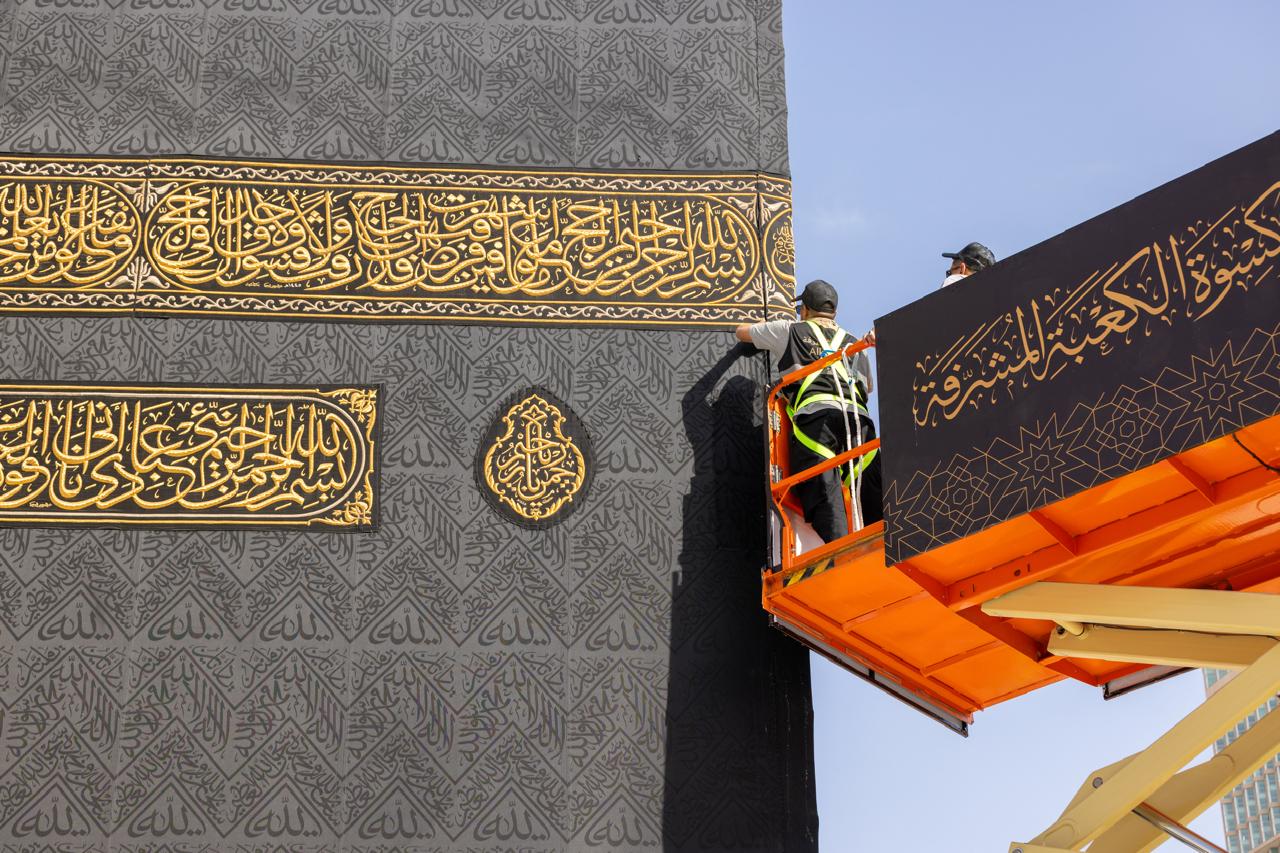
The new Kiswa is made of 670 kilograms of natural black silk and 150 kilograms of gold and silver-plated thread. It features 68 Quranic verses embroidered with 24-karat gold-plated silver, all hand-stitched by skilled artisans using traditional Islamic embroidery techniques.
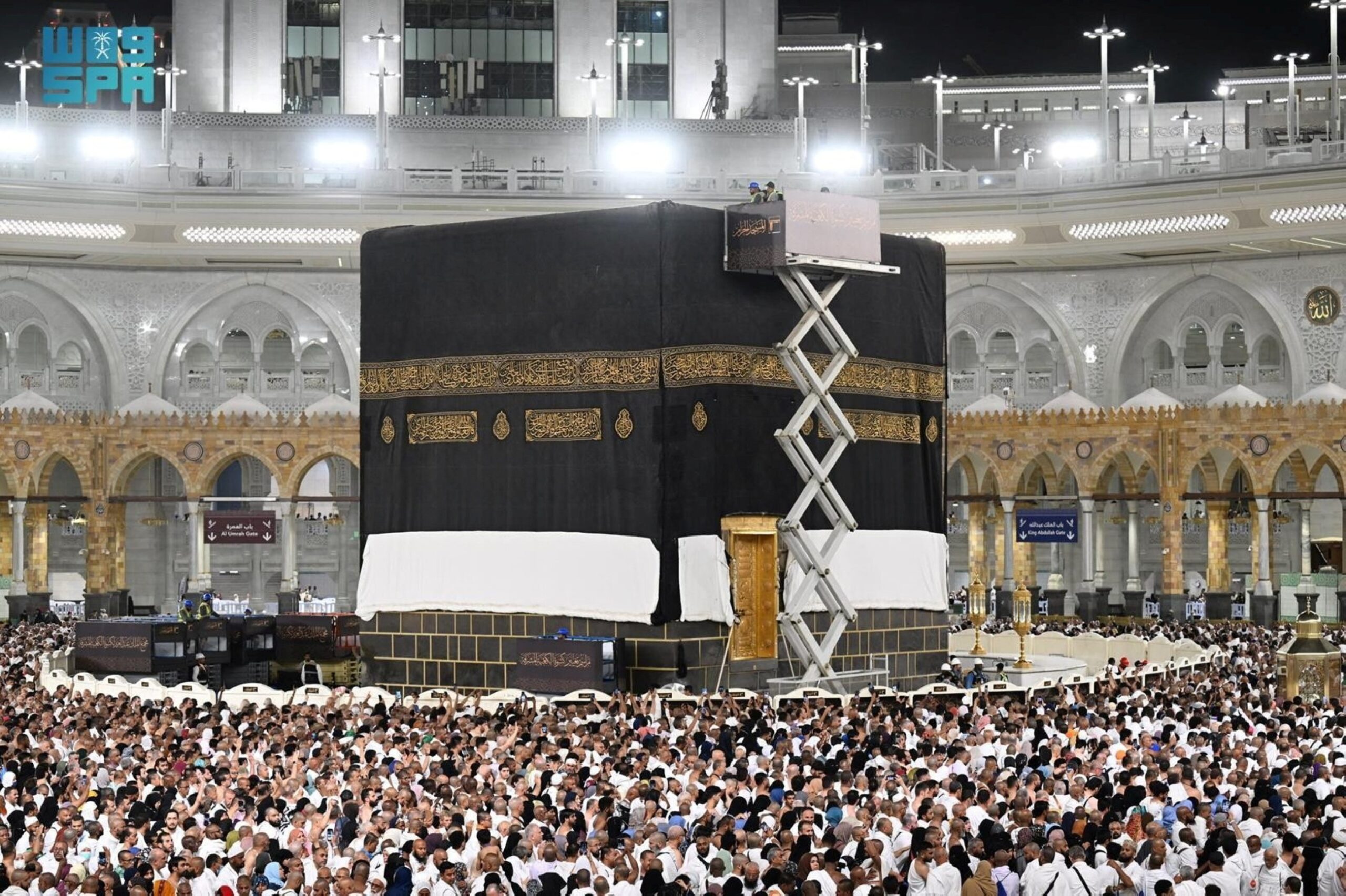 The massive textile spans 658 square meters, consists of 47 silk panels, and weighs more than a metric ton.
It is produced annually at the King Abdulaziz Complex for the Manufacturing of the Kaaba’s Kiswa in Mecca, and its estimated cost is approximately $4.5 million (385 530 300.00 INR
).
A ritual of reverence and precision
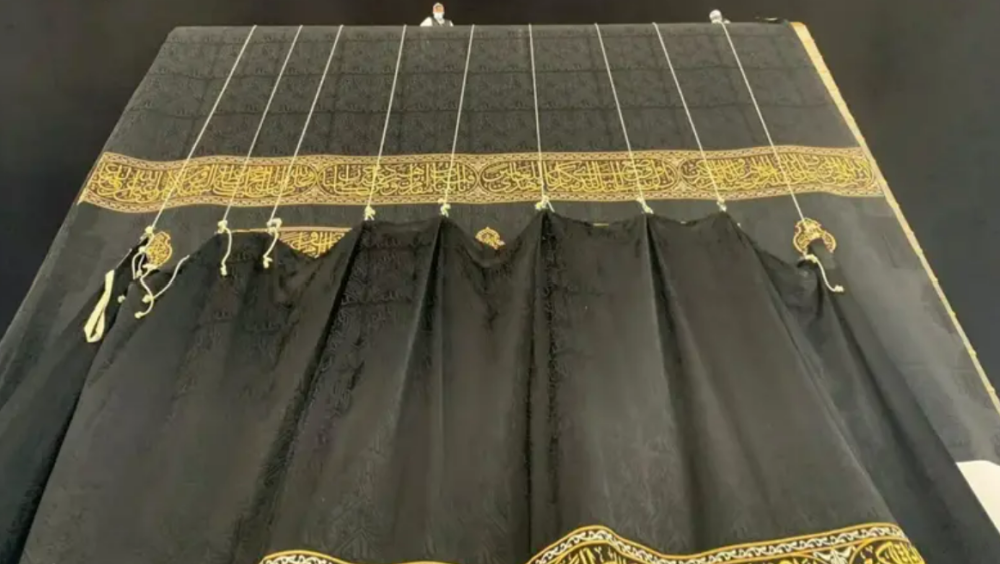
The Kiswa is replaced every year on the first day of Muharram – which falls on Thursday in the lunar calendar – in a carefully coordinated operation involving over a hundred specialized technicians.
The installation is carried out using electric lifts and scaffolding to ensure that no part of the Kaaba is exposed at any time.
To protect the Kiswa from damage during the Hajj pilgrimage, a white cotton covering known as the “Ihram of the Kaaba” is temporarily added to its lower portion. This barrier shields the cloth from being touched, torn, or stained as millions of pilgrims circumambulate the Kaaba during the peak days of worship.
What happens to the old Kiswa?
Once the new Kiswa is in place, the previous year’s covering is carefully removed, cleaned, and cut into approximately 56 pieces. These pieces are then distributed under royal directive to kings, heads of state, foreign ambassadors, prominent religious institutions, and international Islamic organizations.
Other sections of the old cloth are preserved in government conservation facilities and archival storage centers, ensuring their protection from deterioration. These fragments are seen as symbols of spiritual and cultural heritage and are often displayed in official institutions, museums, and exhibitions.
 A global legacy
Some of the oldest surviving pieces of the Kiswa date back to the Mamluk and Ottoman eras.
Notable examples include a 1517 Kiswa displayed at the Grand Mosque of Bursa in Turkey. Other historical fragments are housed in Cairo’s Islamic museums and Turkish archives, showcasing the artistic legacy of Islamic civilization through centuries of Kaaba coverings.
Evolution of the Kiswa tradition
The tradition of covering the Kaaba dates back to the early days of Islam.
During Prophet Mohammed’s time, it was customary to drape the Kaaba in Yemeni cloth. Later, under the caliphs and Islamic dynasties, Kiswas were produced in Egypt and sent annually to Mecca in elaborate ceremonial caravans.
Since 1927, following a royal order from King Abdulaziz, Saudi Arabia began producing the Kiswa locally.
Today, the King Abdulaziz Complex employs hundreds of craftsmen and specialists who oversee the entire process – from dyeing and weaving the silk to stitching Quranic verses in gold and silver.