 Bilal Bashir Bhat
On the southern slope of Hari Parbat, also known as Kooh-e-Maran lies the final resting place of Kashmir’s revered saint, Sheikh Hamza Makhdoom, born Muhammad Hamza Raina (1504–1573). The shrine was originally built during the era of Mughal Emperor Akbar (1542–1605) and was later expanded by subsequent Mughal governors of Kashmir. Its interiors are richly decorated with papier-mâché, intricate calligraphy, and wooden latticework. Adjacent to Makhdum Sahib’s grave is the tomb of his eminent disciple, Baba Dawood Khaki (1529–1595), who passed away more than two decades after his master.
The connection between Sheikh Hamza Makhdoom and Baba Dawood Khaki goes beyond that of master and disciple or their burial in the same place. A story often whispered in the Valley claims that Sheikh Hamza Makhdum, popularly known as Makhdoom Sahib, invited Emperor Akbar to Kashmir. This tale lingers in casual conversations and frequently resurfaces in political polemics. Yet, when tested against history, it collapses under the weight of facts.
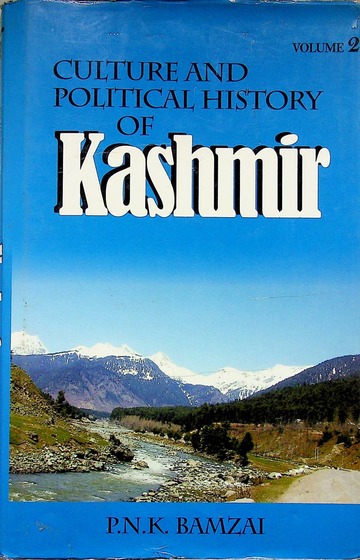 Makdoom Sahib, described by P.N.K. Bamzai in Culture and Political History of Kashmir as “a saint of extraordinary influence and spiritual depth,” was born in 1494 and passed away in 1576. Akbar annexed Kashmir a full decade later, in 1586.
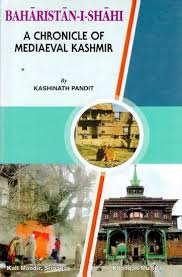
Simply put Makdoom Sahib could not have extended an invitation to the Mughal court. As Mohibbul Hasan notes in Kashmir Under the Sultans, “by the time the Mughals marched into the Valley, the mantle of spiritual and political mediation had passed to Makdoom Sahib’s disciples.” The Baharistan-i-Shahi and Haidar Malik’s Tarikh-i-Kashmir both confirm that the actual invitation to Akbar came not from Makdoom Sahib, but from his disciples, Sheikh Yaqub Sarfi and Baba Dawood Khaki.
Why did these scholars and Sufis, tied to Makdoom Sahib’s spiritual lineage, turn to Mughals? Their motivation was not ambition, but desperation. Sixteenth-century Kashmir was fractured by sectarian strife, economic misery, and political chaos under the Chak rulers.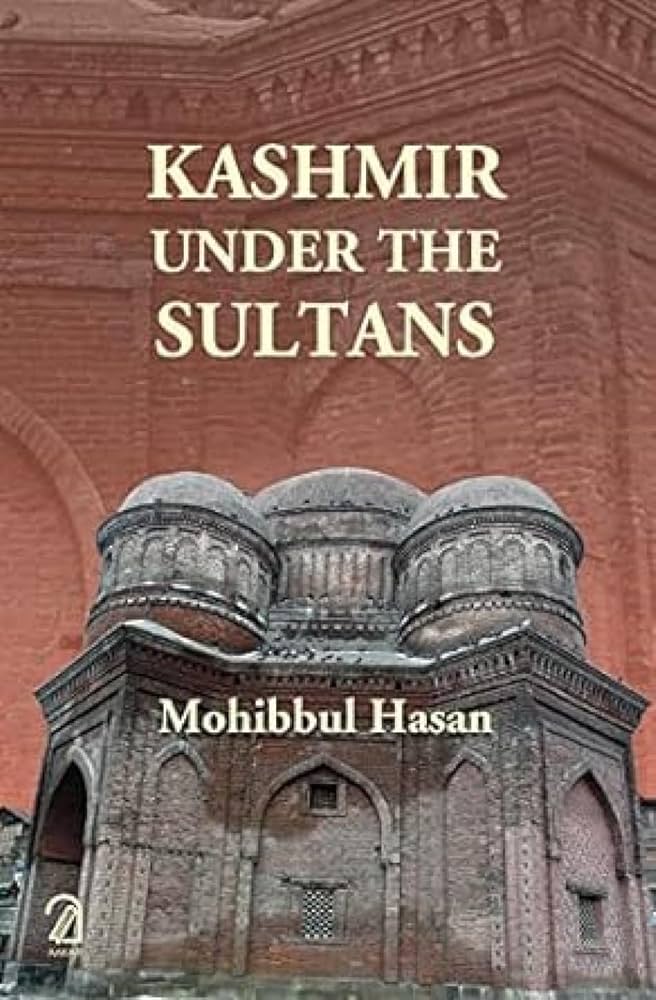
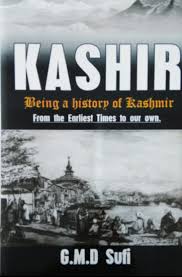
G.M.D. Sufi, in Kashir: A History of Kashmir, observes that “the call to Akbar was less a surrender of sovereignty than a plea for stability.” Indeed, Sheikh Yaqub Sarfi led a delegation of Kashmiri notables to Akbar’s court, accounts differ whether in Agra or Lahore, where Baba Dawood Khaki and others accompanied him. They promised that Kashmiris would welcome Mughal authority.
Baba Dawood Khaki, born in 1500 into the Ganai family of Kalashpora, had risen from a tutor in Sultan Ali Shah’s court to Chief Justice. His writings reflect both the anxiety of political upheaval and a yearning for justice. Sheikh Yaqub Sarfi, a poet-scholar of great repute who had traveled widely across the Islamic world, gave intellectual weight to the delegation.
 Akbar’s annexation in 1586 ended more than Chak rule; it ended Kashmir’s sovereignty. The Sultanate, established in 1339 with Shah Mir, was abolished. Decisions for Kashmir were now made in Delhi or Agra, not Srinagar.
As Mohibbul Hasan notes, “the fall of the Chak dynasty in 1586 marked the end of Kashmir’s independent Sultanate.” Though the Mughal era enriched Kashmir culturally, it also set the precedent for successive foreign rules like Afghans, Sikhs, Dogras.
It is important to note that Akbar himself never visited Kashmir after annexation. Chirag Beg, one of the prominent commanders of Emperor Akbar led the Mughal forces into Kashmir. Pogh Mughal was instrumental in consolidating Mughal control after the conquest, particularly in subduing local resistance and ensuring that the nobility aligned with Akbar’s authority. His name comes up in connection with the early Mughal administrative-military presence in the Valley.
Chirag Beg played a central role in the decisive battle that forced the Chak ruler to retreat, paving the way for the annexation of Kashmir into the Mughal Empire.
Governance was left to Mughal subedars like Qasim Khan, Yusuf Khan, Mirza Ghiyas Beg, Ali Mardan Khan, Inayatullah Khan, Hassan Beg, Saif Khan, Ibrahim Khan, who according to historial were more interested in tax collection and military control than pushing ideology.
 As Bamzai records, “the Mughal governors introduced administrative changes but Akbar’s spiritual experiments had little resonance in Kashmir.” His policy of Sulh-i-Kul (universal tolerance) eased Hindu–Muslim relations slightly, but Din-i-Ilahi never took root in the Valley.
Yet serious history cannot afford to indulge myth. To attribute the Mughal conquest to Makdoom Sahib is to erase the difficult choice made by his disciples, Sheikh Yaqub Sarfi and Baba Dawood Khaki, who turned to Akbar.
 Recognizing this truth does not diminish the saint’s spiritual stature; rather, it respects his legacy by refusing to ascribe to him what he did not do. As Bamzai reminds us, “The sanctity of history, like that of faith, lies in truth, not embellishment.”
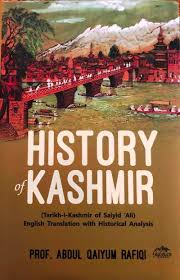
The real story, preserved in Baharistan-i-Shahi, Tarikh-i-Kashmir, and corroborated by scholars like Mohibbul Hasan, G.M.D. Sufi, Bamzai, and Rafiqi, leaves no doubt: it was not Makdoom Sahib, but his disciples, who opened Kashmir’s gates to the Mughals. Their decision altered the course of Kashmiri history forever.
The reception of Mughal rule by the local populace of Kashmir in 1586 was mixed, layered with both relief and resentment, depending on which class or group one examines.
When Sultan Yaqub Shah Chak was defeated and Akbar annexed Kashmir, many of the elites, Sufi scholars, and some sections of the nobility initially welcomed the Mughals. Chroniclers like Baharistan-i-Shahi note that sections of Sunni scholars, including Sheikh Yaqub Sarfi, believed Mughal patronage would safeguard their interests.
However, for the ordinary Kashmiri populace, the story was different. The Mughal conquest meant the loss of political independence for the first time in Kashmir’s history. Over time, resentment brewed as heavy taxation, the exploitation of Kashmir’s natural wealth, and the imposition of imperial authority alienated the masses. By Jahangir’s reign, even though he admired Kashmir’s beauty and patronized its art, locals began to see Mughal presence as that of an occupying power.
When the Mughals annexed Kashmir in 1586, the fall of the Shia Chak dynasty marked the decline of Shia political power. Under Akbar, his policy of Sulh-i-Kul ensured relative tolerance, though Shias lost influence in governance and were gradually sidelined.
The situation worsened under Jahangir, who allowed orthodox Sunni clerics to dominate local politics. Sporadic sectarian tensions emerged, often directed against Shia processions and practices.
Under Shah Jahan, restrictions tightened, but it was Aurangzeb’s reign that proved most difficult. His Sunni orthodoxy encouraged Mughal governors in Kashmir to harass Shia communities, destroy some khanqahs and imambaras, and suppress Muharram rituals. Several Shia scholars were persecuted, and their institutions weakened.
By the 18th century, as Mughal power waned, Shias continued to face intermittent violence and discrimination at the hands of local governors and rival groups. Despite this adversity, the community preserved its rituals and traditions, often in secrecy, showing resilience in the face of systematic marginalization.
Overall Kashmiris initially received Mughal rule with cautious optimism and selective support, but as decades passed, it transformed into a narrative of subjugation and loss of sovereignty, preserved in local memory and chronicles. (END)
The writer, Bilal Bashir Bhat, is the editor of the local Urdu daily Srinagar Jang. He also writes on diverse topics for various publications and can be reached at bilalbashirbhat@gmail.com.