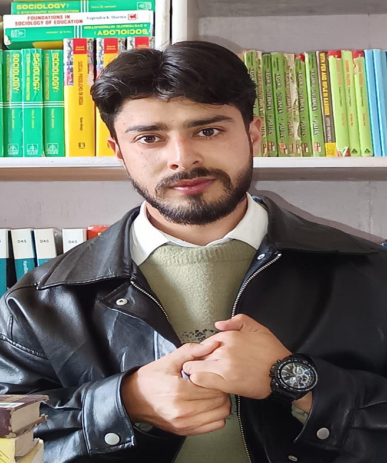
 SHARIQ GANI LONE
Drug addiction in Kashmir is not just an issue; it is a quiet pain that moves through homes, through families, through the hearts of young people who once carried dreams and ambitions but now find themselves struggling against something they never intended to invite into their lives. It does not begin as a crisis; it begins as a moment, a small decision, a feeling of curiosity or pressure or emotional exhaustion. And in that moment, what seems harmless slowly becomes powerful, slowly becomes controlling, and slowly takes away the very freedom that defines a human life. This is the painful journey from experiment to enslavement, a journey that is unfolding in silence across many parts of Kashmir, where the beauty of the land contrasts deeply with the unseen struggles of its people.
In this region, where history, emotions, and uncertainty often shape daily life, the youth carry burdens that are not always visible. They face expectations from family, society, and themselves, while also dealing with limited opportunities and internal conflicts that remain unspoken. And when these emotions do not find healthy expression, they seek release in other ways, sometimes through harmful choices. Substances become a temporary escape, a way to feel lighter, a way to forget, a way to pause the noise inside the mind. But this pause is temporary and deceptive because, while it offers a moment of relief, it quietly builds a chain that grows stronger with each use until the individual is no longer in control but is instead controlled by the very thing they once chose.
The tragedy of addiction is that it does not announce itself. It grows slowly within habits, within friendships, within isolated moments, and by the time its presence is recognized, it has already created distance between the individual and their family, between dreams and reality, between hope and fear. Parents begin to notice changes in behavior; silence replaces conversations, trust begins to weaken, and the home, which once felt warm, begins to feel uncertain and heavy. Siblings feel confused and helpless, unable to understand what is happening, while friends often step back, not knowing how to respond. And in this silence, the individual sinks deeper into dependency, feeling alone even when surrounded by people.
I was speaking to a mother; this is a confidential matter, but I have her permission to share it. She told me that one day, after she was completely exhausted, she handed her own son over to the police. Her son had sold all her jewelry; he troubled his father, he troubled his mother. He had gone so deep into drug use, using injections, that he left the entire family in pain and fear. And that mother said that she herself took the step to hand him over because she had no other choice. This was her only son, and yet she had to take that decision. This story shows how one individual can shake an entire family, how one addiction can break generations, how one moment of experiment can turn into lifelong suffering for not just the individual but for everyone connected to him.
Yet even in this growing darkness, there are moments of light that remind us that change is possible, that awareness is increasing, and that efforts are being made to confront this serious challenge. One such important step has been taken by Manoj Sinha, whose outreach has encouraged legislators, civil society members, and political leaders to come together in a united fight against the drug menace. This collective call is not merely administrative but deeply meaningful, as it reflects an understanding that such a crisis cannot be addressed in isolation and must involve every section of society. Alongside this, the emphasis on a focused hundred days anti-drug campaign stands as a strong and positive initiative, indicating urgency, commitment, and a clear direction forward. And it sends a powerful message that recovery from this serious disaster is possible when leadership and society act together.
At the same time, the role of law enforcement, particularly the Jammu and Kashmir Police, has been vital in addressing the supply side of the problem through continuous efforts to curb drug trafficking, dismantle networks, and maintain vigilance across the region. Their contribution forms an essential pillar in the broader fight against addiction, as controlling availability remains a key factor in prevention. However, enforcement alone cannot solve the issue and must be complemented with awareness, rehabilitation, and community engagement.
Another important dimension that cannot be ignored is the role of society itself, where sometimes, instead of support, individuals struggling with addiction face judgment, isolation, and pressure, which push them further into silence rather than helping them come forward for recovery. This social neglect often becomes an invisible force that deepens the crisis, making individuals feel rejected and misunderstood. Therefore, it becomes necessary to shift from a culture of blame to a culture of empathy, where people are encouraged to seek help without fear and where communities actively participate in supporting recovery rather than unintentionally worsening the problem.
Families hold a central role in this journey because they are often the first to observe changes and the first to feel the impact. A home that offers understanding, patience, and open communication can become a place of healing rather than judgment. Many individuals struggling with addiction do not need punishment; they need empathy, they need someone to listen without anger, someone to guide without force, someone to remind them that their identity is not defined by their struggle but by their ability to rise above it. However, this requires awareness and emotional strength from families who themselves may be experiencing fear, confusion, and pain.
Communities too have a responsibility to create safe and supportive spaces where young people feel valued and engaged, where awareness about mental health and substance abuse is openly discussed, and where seeking help is seen as a sign of strength rather than weakness. Educational institutions can play a powerful role by not only focusing on academic success but also on emotional well-being, by encouraging dialogue, by providing counseling support, and by guiding students toward positive choices. Because prevention begins with awareness, and awareness begins with conversation.
At the same time, attention must be given to those who are already trapped in the cycle of addiction because recovery is not immediate. It is a long and challenging journey that requires consistent support, medical care, counseling, and rehabilitation services that are accessible and compassionate. Individuals in recovery often face setbacks, moments of weakness, moments of doubt, and in these moments, the presence of support systems can make the difference between relapse and progress. Society must therefore move beyond stigma and create pathways for reintegration, where individuals are given the opportunity to rebuild their lives with dignity and purpose.
The emotional impact of drug addiction is deep and far-reaching. It affects not only the individual but everyone connected to them: parents who watch their children struggle, siblings who feel the distance growing, families that experience both emotional and financial strain, and communities that witness the gradual loss of potential and hope. This collective pain highlights the urgency of addressing the issue with sensitivity, understanding, and action because ignoring it only allows it to grow stronger.
Despite these challenges, there remains a strong sense of hope because every individual has the capacity to change, every life has value, and every struggle has the potential for recovery. The increasing awareness, the initiatives being taken, the involvement of leadership, the active role of law enforcement, and the gradual shift in societal thinking all point toward a future where drug addiction is no longer hidden but addressed openly and effectively. The path forward requires courage—courage to acknowledge the problem, courage to support those affected, and courage to implement solutions that are both practical and compassionate.
The journey from experiment to enslavement may be painful, but it is not irreversible. With collective effort, informed understanding, emotional support, and sustained commitment, Kashmir can move toward a future where its youth are protected, where its families are strengthened, and where the shadow of addiction is replaced with the light of awareness, recovery, and resilience. The fight against this silent disaster is not easy, but it is necessary, and it is possible because every step taken toward awareness, every effort made toward prevention, and every act of support given to those in need brings the region closer to a tomorrow where freedom replaces dependency and hope overcomes despair.