Onlykashmir.in News Desk
In a moment that bridges Kashmir’s glorious past with its evolving present, the historic Vicharnag Mandir Complex in Srinagar was formally reopened on Sunday after extensive restoration, with Lieutenant Governor Manoj Sinha describing the occasion as a landmark in the revival of Jammu and Kashmir’s civilisational, cultural and spiritual legacy.
More than the restoration of an ancient temple, the reopening of Vicharnag marks the revival of a site that, for centuries, was revered as one of Kashmir’s foremost centres of learning, philosophy and religious discourse. Its very name tells its story—“Vichar” means thought, reflection or deliberation, while “Nag” is the Kashmiri word for a natural spring. Together, Vicharnag literally translates to the “Spring of Reflection,” a place where knowledge flowed as abundantly as its sacred waters.
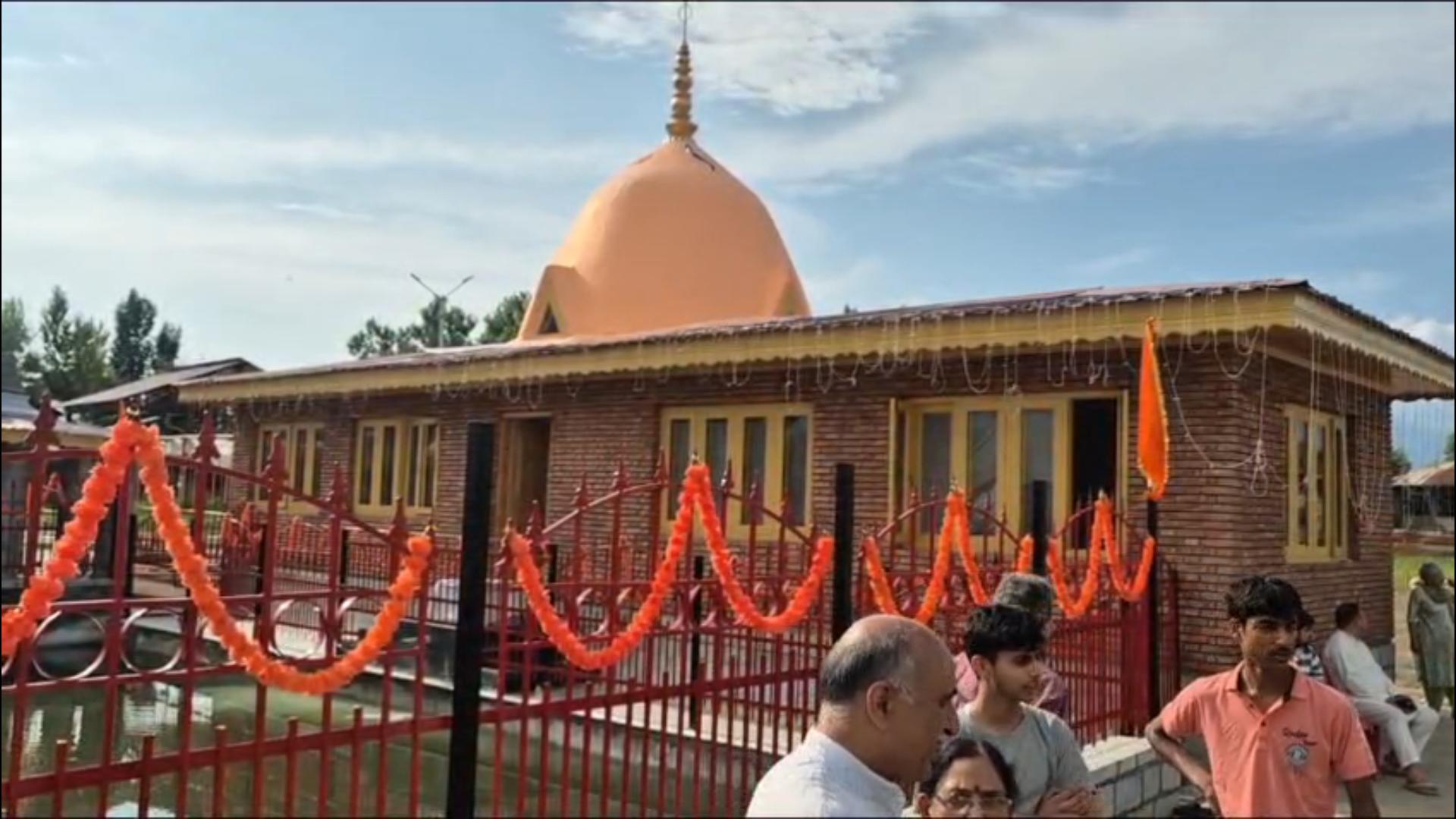
Long before universities became centres of higher learning, Vicharnag had earned a reputation as Kashmir’s “Seat of Discussion.” Historians and local traditions describe it as a gathering place where scholars, philosophers and Kashmiri Pandits debated theology, philosophy, mathematics, astronomy and the Hindu calendar (Panchang). Intellectual exchanges held here reflected the rich scholarly tradition that made Kashmir one of South Asia’s most celebrated centres of knowledge.
The shrine’s antiquity is reflected in the Rajatarangini, Kalhana’s 12th-century chronicle of Kashmir, where the site finds mention as an important landmark. The complex is also closely associated with the ancient Sharada tradition, the intellectual and spiritual heritage that produced generations of Sanskrit scholars and philosophers.
Local traditions further suggest that the great philosopher Adi Shankaracharya visited the site for theological discussions, while the intellectual legacy of Kashmir’s legendary philosopher Abhinavagupta is deeply intertwined with the broader scholarly culture that flourished around places like Vicharnag.
At the heart of the complex lies a sacred spring with a Shiva Lingam installed on a stone platform, making it one of the Valley’s oldest surviving Shaivite shrines.
“For centuries, devotees gathered here to perform rituals, offer prayers and bathe in the holy waters, believing the spring possessed immense spiritual significance. Before the migration of the Kashmiri Pandit community in the early 1990s, the temple witnessed large annual congregations and remained an integral part of Kashmir’s religious landscape,” said Abdul Satar, an octogenarian while talking to Onlykashmir.in“Years of neglect following the exodus left the shrine and its heritage structures in a state of decay. The latest restoration has transformed the complex, preserving its historic architecture while restoring its spiritual ambience. The reopening is widely seen as an important step towards safeguarding one of Kashmir’s oldest cultural landmarks,” Satar added.
Speaking at the inauguration, Lieutenant Governor Manoj Sinha said the restoration of the Vicharnag Mandir Complex represents the revival of Jammu and Kashmir’s shared civilisational memory. He noted that the shrine was historically linked to the Sharada tradition and had once attracted scholars from across the world for intellectual discourse.
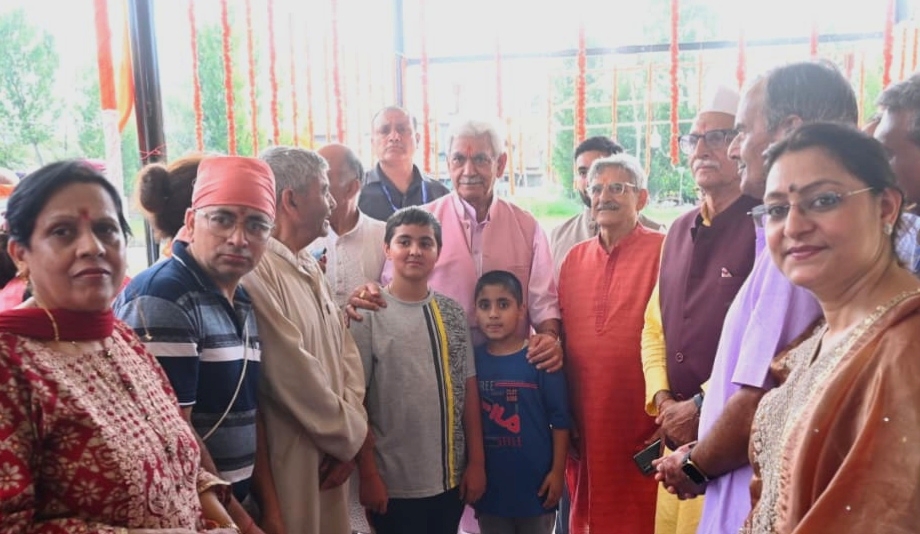
Expressing satisfaction at seeing devotees once again performing yajna, havan and the installation of the idol of Lord Shiva, he voiced hope that Jammu and Kashmir would once again emerge as a centre of learning, peaceful dialogue and spiritual awakening.
The Lieutenant Governor also highlighted Kashmir’s association with the renowned philosopher Abhinavagupta, recalling the Valley’s enduring contribution to philosophy, spirituality and the pursuit of knowledge. He described Vicharnag as a symbol of a civilisation where faith and scholarship flourished together.
The inauguration ceremony was attended by devotees, members of the Kashmiri Pandit community, religious leaders, civil society representatives and senior government officials, many of whom described the reopening as an emotional homecoming for a shrine that has stood witness to centuries of Kashmir’s history.