Onlykashmir.in Feature Desk
The annual Urs of the revered Sufi saint Hazrat Khwaja Baha-ud-Din Naqshband Bukhari (RA) was observed in Old City Srinagar on Monday with religious fervour and devotion.
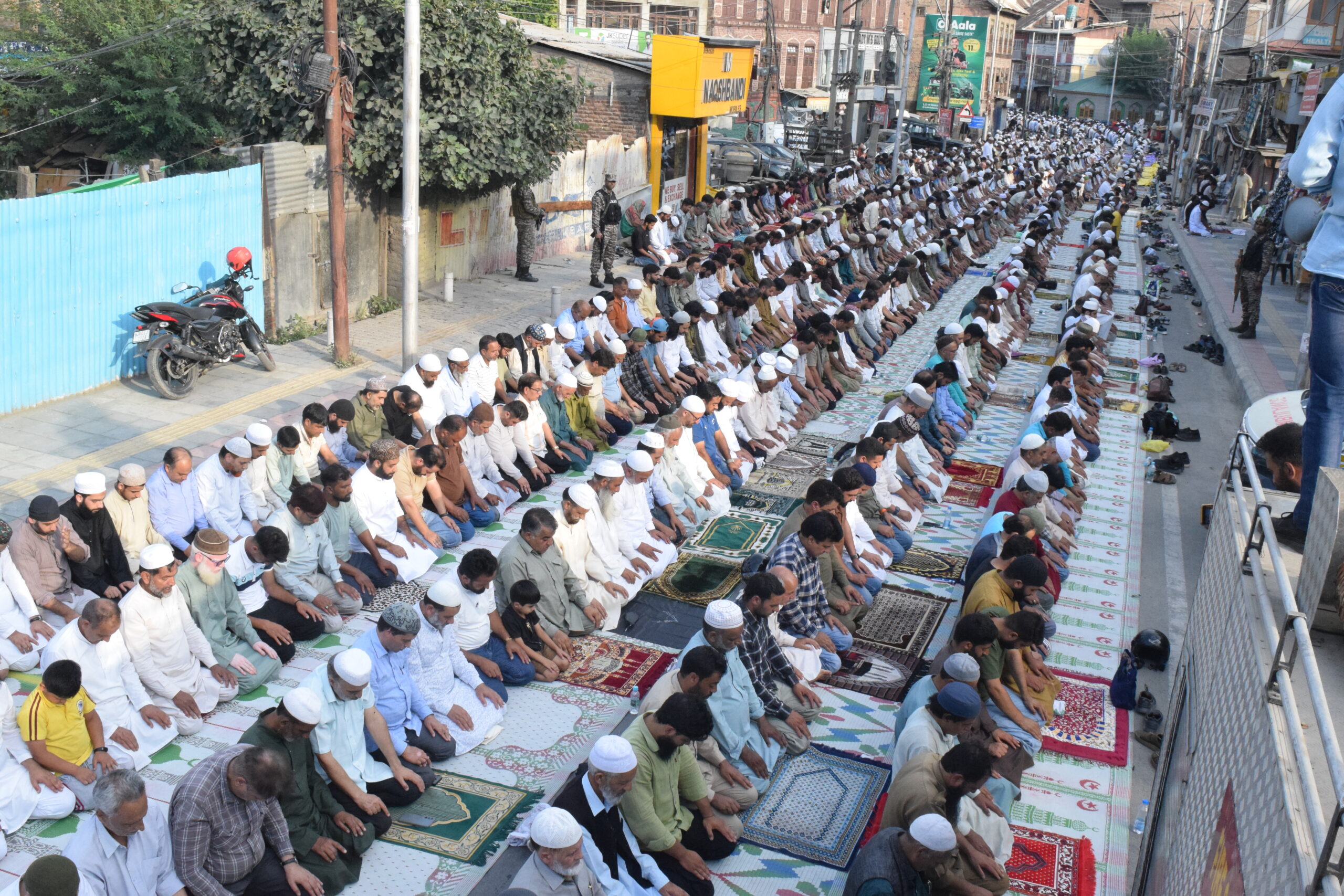
The occasion was marked by the traditional Khoja Digar congregational prayer at the historic Naqshband Sahib Shrine in Khwaja Bazar, Nowhatta, Srinagar, where thousands of devotees from different parts of the Valley participated.
Khwaja Baha-ud-Din Naqshband Bukhari (RA), the renowned spiritual founder of the Naqshbandi Sufi order, passed away in Bukhara. However, the Naqshbandi tradition later spread to Kashmir and became an important part of the Valley’s Sufi heritage.
The spread of the Naqshbandi tradition in Kashmir is closely associated with Khwaja Khawand Mahmood (RA) and the spiritual lineage that followed him. The tradition eventually became firmly established in Srinagar, with the Naqshband Sahib shrine emerging as an important centre of Naqshbandi spirituality.
Khoja Digar, traditionally observed on 3 Rabi-ul-Awwal, is closely associated with the Urs of Khwaja Baha-ud-Din Naqshband Bukhari (RA). The principal observance involves a large congregational Asr prayer, along with prayers, Zikr, Istighfar and supplications.
On the occasion, devotees prayed for peace, prosperity, communal harmony and the well-being of the people of Kashmir, while religious scholars highlighted the spiritual teachings of Khwaja Baha-ud-Din Naqshband (RA), particularly devotion, self-purification and remembrance of Allah.
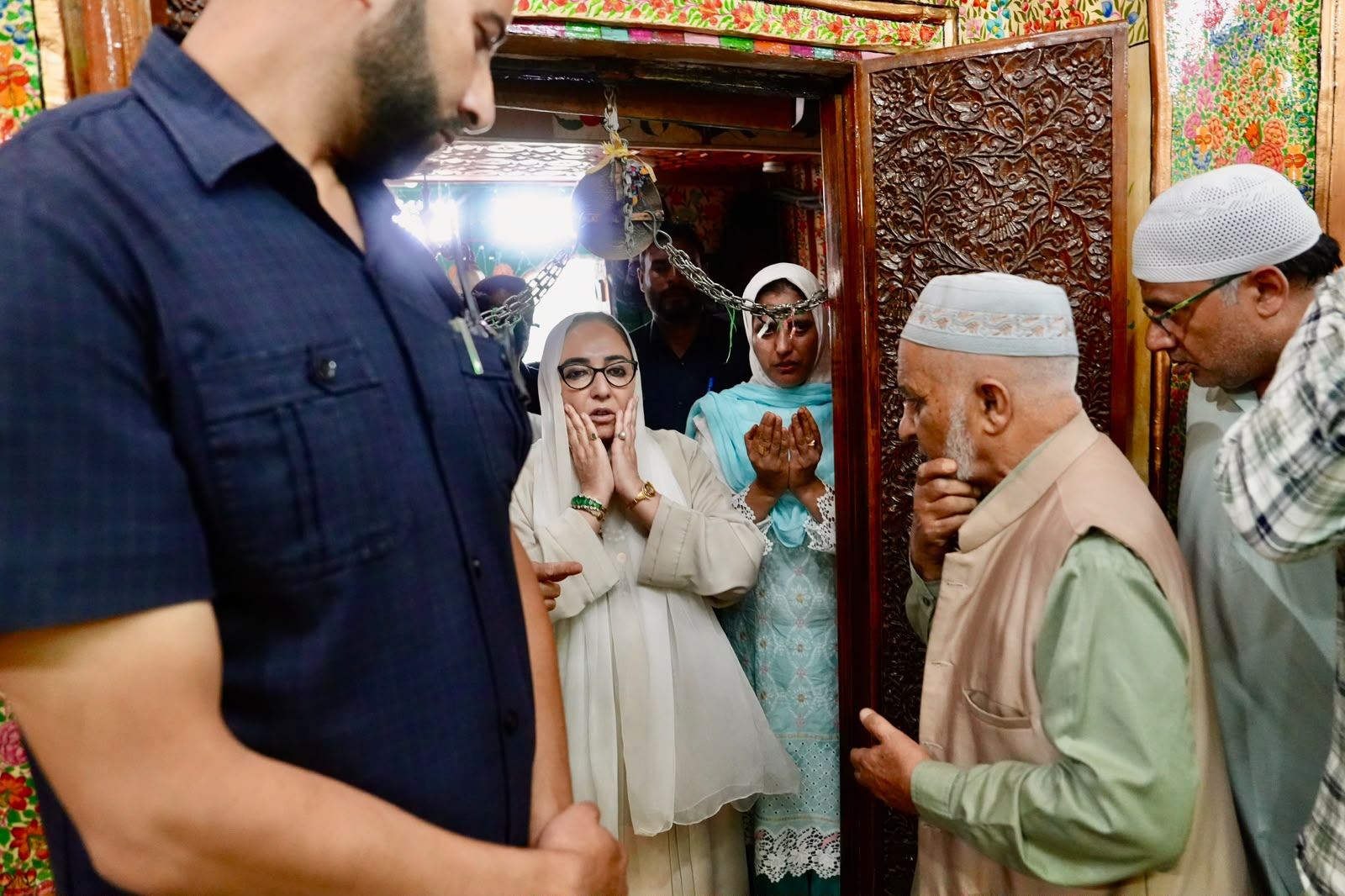 Pertinently, ahead of the religious observance of Khwaja Digar, Chairperson of the Jammu & Kashmir Waqf Board, Dr. Syed Darakhshan Andrabi, personally visited the historic Naqshband Sahib Shrine in Srinagar and reviewed the arrangements made there in detail.
Meanwhile, Mirwaiz-e-Kashmir Dr Moulvi Mohammad Umar Farooq, who was placed under house arrest today and denied permission to address the time-honoured Khawaja Digar religious gathering at Khanqah-e-Naqshband Sahib (RA), in a post on X said:
 “Once again I have been denied permission to address the time honoured religious gathering of Khawaja diger in Naqshband sahab today,with tens of thousands of people eagerly waiting there to participate in this spiritually uplifting religious congregation observed on the 3rd of Rabi-Ul-Awwal each year, and have been put under house arrest!
The large gathering at the Naqshband Sahib Shrine and surrounding areas reflected the enduring place of Khoja Digar in Kashmir’s religious and cultural heritage. The centuries-old tradition continues to serve as a prominent expression of the Valley’s deep-rooted connection with the Naqshbandi Sufi tradition.
According to several Kashmiri historical accounts, Khoja Digar itself became established during the time of Khwaja Khawand Mahmood, with sources dating the tradition to around 1017 AH / 1608–09 CE. Some accounts specifically attribute the introduction of the congregational prayer to Khwaja Moin-ud-Din Naqshbandi.
One historical caution: accounts differ on precisely who instituted the prayer and on the exact chronology. Some sources attribute its introduction to Khwaja Khawand Mahmood, while others specifically credit Khwaja Moin-ud-Din. So it is safest to describe its origin as belonging to the Khwaja Khawand Mahmood–Moin-ud-Din Naqshbandi tradition in early-17th-century Kashmir, rather than assigning it unequivocally to one individual.
The observance is connected with the Urs of Khwaja Baha-ud-Din Naqshband (RA), traditionally observed on 3 Rabi-ul-Awwal. On that day, a large congregation gathers at the Naqshband Sahib shrine in Khwaja Bazar, Srinagar, for the special Asr prayer known as Khoja Digar.
Who is Khwaja Baha-ud-Din Naqshband:
Baha al-Din was born in March 1318 in the village of Qasr-i Hinduvan, near Bukhara. Like the majority of the region’s sedentary population, Baha al-Din was a Tajik, i.e. a speaker of Persian and a participant in its culture. According Encyclopædia Iranica, the texts that claim Baha al-Din was descended from the Islamic prophet Muhammad through Ja’far al-Sadiq (died 765), should be “treated with reserve”. Early texts do not mention Baha al-Din’s supposed ancestry to Muhammad, but they do imply that his teacher Amir Kulal (died 1370) was a descendant of Muhammad through Ja’far al-Sadiq, which may suggest that their genealogies were later conflated.
Annemarie Schimmel highlights the descent of Bahauddin from Hasan al-Askari, referring to Khwaja Mir Dard’s family and “many nobles, from Bukhara; they led their pedigree back to Baha al-Din Naqshband, after whom the Naqshbandi order is named, and who was a descendant, in the 13th generation of the 11th imam al-Hasan al-Askari”.
Three days after his birth, Baha al-Din was adopted as a spiritual son by Baba Mohammad Sammasi, a master of the Khwajagan, a Sufi order founded by Yusuf Hamadani (died 1140). Baha al-Din’s paternal grandfather brought him to Sammasi, where he was the latter’s murid (novice). Sammasi later entrusted Baha al-Din’s training to his distinguished student Amir Kulal.