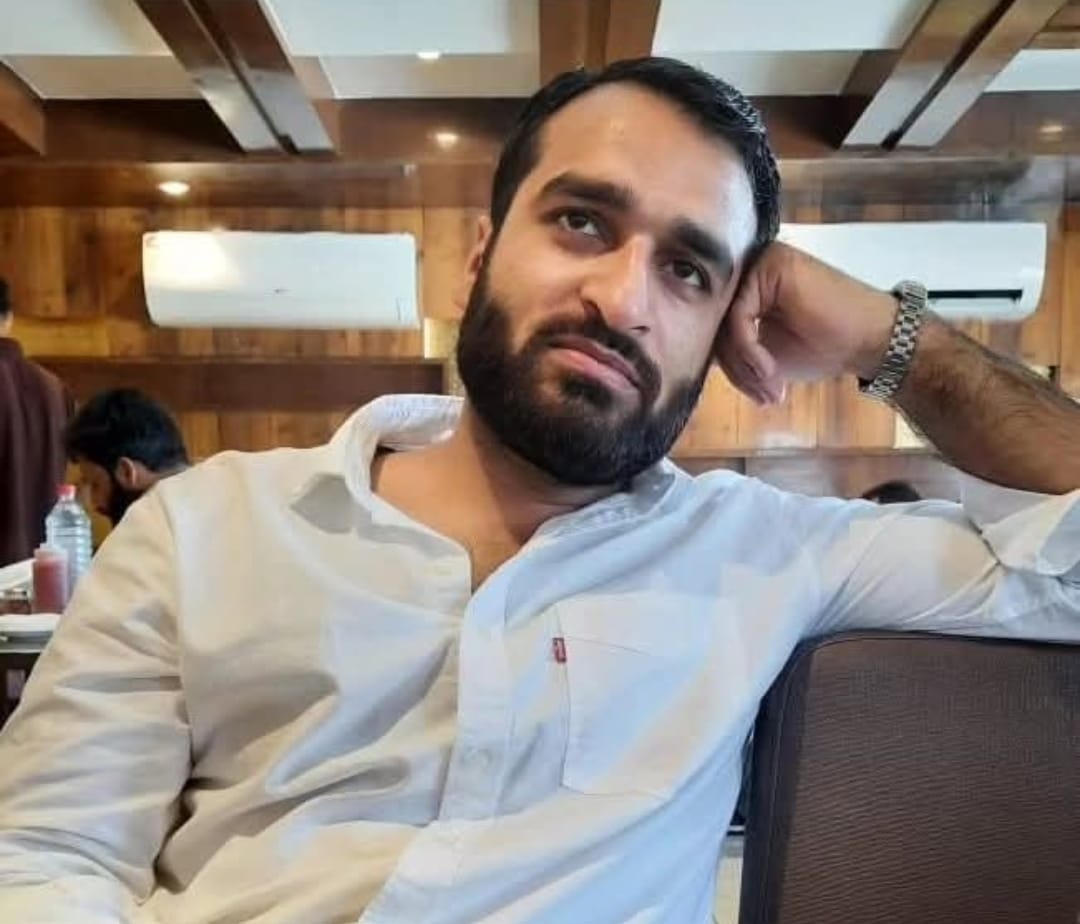
 Book Review by Umar Fayaz Zaroo
FCS & CA Department, Srinagar
Email: readerroom01@gmail.com
“They say to Muslims that Iqbal has mistranslated the Quran and misrepresented Islam, while to fellow Christians they say that Iqbal is a fanatic Muslim” (p. 86).
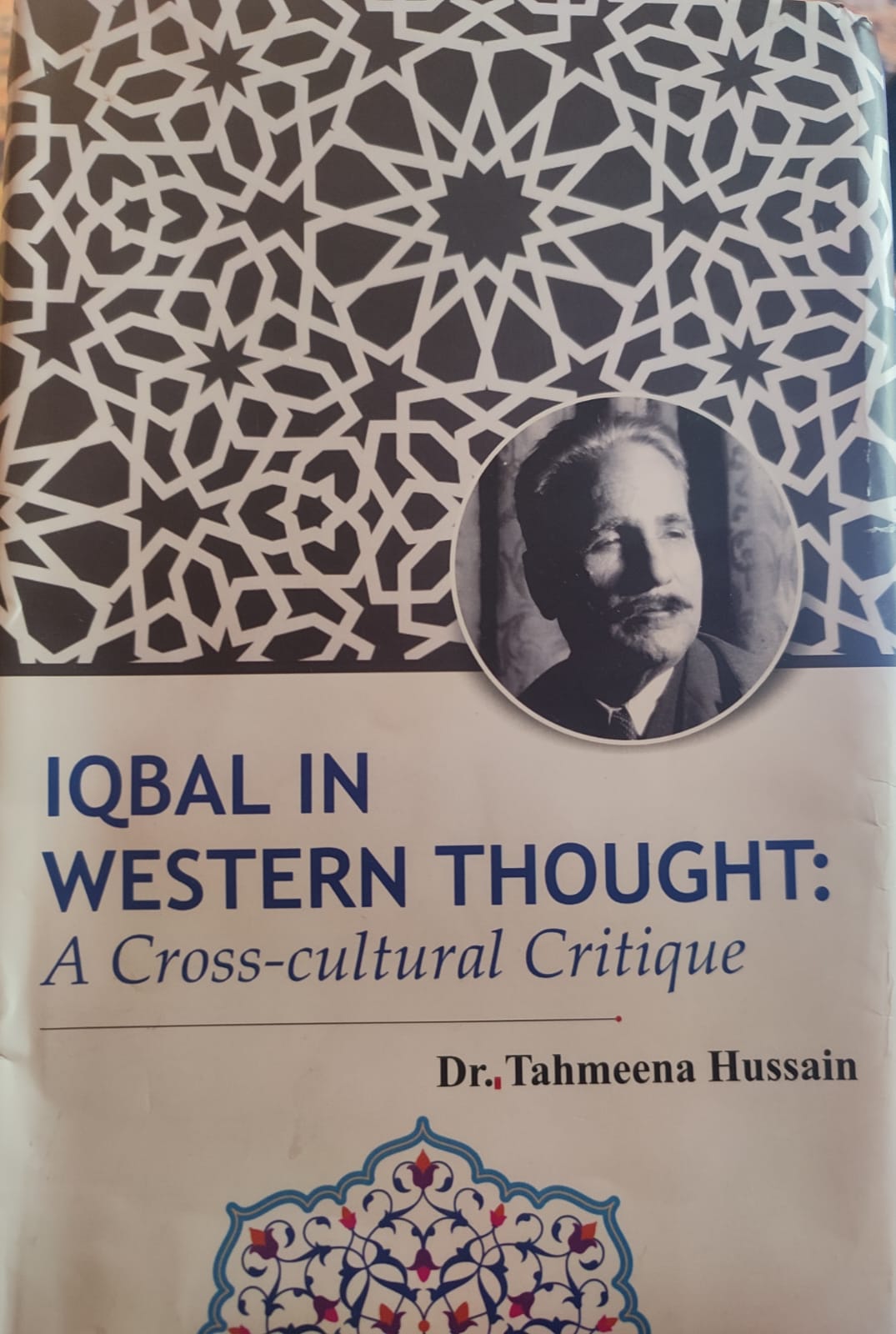
This striking observation, discussed by Dr Tahmeena Hussain in her book Iqbal in the Western Thought, published by Kitabi Dunya, Delhi, encapsulates one of the central concerns of her scholarly inquiry: the contradictory perceptions, interpretations and assessments of Allama Muhammad Iqbal among Western scholars and intellectuals. The book offers an engaging examination of Iqbal’s intellectual engagement with the West, the philosophical influences that shaped his thought, and the ways in which his literary and philosophical contributions have been interpreted, appreciated and, at times, misrepresented by Western critics.
About the Author
Dr Tahmeena Hussain holds MPhil, BPharm and PhD degrees in English Literature from the University of Kashmir (KU). She has several scholarly publications to her credit and currently serves in the Education Department of Jammu and Kashmir. Through this work, she undertakes a critical exploration of Iqbal’s intellectual relationship with Western philosophy and literature, situating his ideas within the wider historical and cultural encounter between the East and the West.
 An Intellectual Encounter Between Islam and the West
In the opening chapters, Dr Hussain examines the historical and intellectual tensions between Islam and the West. She argues that, in the post-Renaissance period, Western civilisation expanded its influence across the world with remarkable force, frequently regarding Islam as a potential ideological rival to its increasingly materialistic worldview.
Drawing upon the observations of scholars such as Annemarie Schimmel and T. W. Arnold, the author scrutinises the writings of Western Orientalists, particularly those whose interpretations of Islam were shaped by prejudice and preconceived assumptions. She questions the scholarly integrity of certain anti-Islamic accounts, arguing that their treatment of historical evidence was often selective and ideologically conditioned. The controversy surrounding William Muir also finds mention in this context.
The author further examines the extent to which Iqbal’s European experience influenced his intellectual development. She maintains that many of the impressions he encountered in Europe had already begun to take shape during his association with Western education and culture in colonial India. Having studied at institutions where the curriculum and educational framework were predominantly Western, Iqbal was exposed to European intellectual traditions long before his formal academic engagement with Europe.
Dr Hussain also situates Iqbal’s writings within the political realities of British colonial rule and the wider subjugation of the Muslim world. In this regard, she interprets Shikwa and Jawab-e-Shikwa against the backdrop of contemporary historical developments, particularly the Balkan and Tripoli wars of 1912–1913. These works, she suggests, cannot be understood adequately without appreciating the political anxieties and collective experiences of the Muslim world during that period.
Western Philosophical Influences on Iqbal
One of the most engaging aspects of the book is its examination of Iqbal’s extensive engagement with Western intellectual traditions. Dr Hussain identifies approximately twenty-four Western writers whose works informed different dimensions of his intellectual development.
Her discussion of Adam Smith’s The Wealth of Nations illustrates Iqbal’s interest in economic thought, while the philosophical contributions of Hegel, Henri Bergson and Friedrich Nietzsche are examined in relation to his evolving worldview. The author also traces Nietzschean influences in the imagery of the diamond and the dewdrop in Asrar-e-Khudi. Similarly, Goethe’s West-östlicher Divan emerges as a significant literary inspiration behind Iqbal’s celebrated poetic collection Payam-e-Mashriq.
These intellectual encounters reveal that Iqbal was neither an uncritical admirer of Western civilisation nor an outright opponent of its intellectual achievements. Rather, he approached Western philosophy with a discerning mind, absorbing ideas, questioning assumptions and reinterpreting philosophical concepts through the framework of his own spiritual and intellectual vision.
Dr Hussain effectively demonstrates that Iqbal sought to penetrate the deeper dimensions of European civilisation while examining the relevance of Islamic thought in the context of modern intellectual developments. His engagement with Western philosophy was, therefore, not an exercise in imitation but an attempt to establish a meaningful dialogue between Eastern spirituality and Western rationalism.
Western Readings and Interpretations of Iqbal
The book also provides a valuable account of some of the earliest Western interpretations and critical assessments of Iqbal. It discusses the contributions of R. A. Nicholson, E. E. Dickinson, Wilfred Cantwell Smith, Robert Whittemore, Annemarie Schimmel and Alessandro Bausani, among others.
Of particular interest is Professor Bausani’s assessment that Iqbal’s intellectual framework demonstrates to European audiences that religious conviction, particularly within a monotheistic tradition, is not incompatible with rationality, modernity or intellectual freedom. Such observations underline the universal relevance of Iqbal’s philosophical project and challenge the assumption that modernity necessarily demands a departure from religious consciousness.
Dr Hussain also draws attention to the difficulties involved in evaluating Iqbal’s poetry across linguistic, religious and cultural boundaries. The task becomes particularly challenging when critics depend upon translations rather than engaging directly with the original Urdu and Persian texts. Translating Iqbal is an exceptionally demanding exercise, given the philosophical depth, symbolic richness and rhetorical complexity of his poetry.
The author highlights Iqbal’s distinctive poetic technique, observing that whereas many poets move from imagery towards metaphor, Iqbal frequently proceeds from metaphor towards rhetoric. This distinctive approach makes his poetry particularly demanding for translators and critics, who must negotiate not merely linguistic meanings but also the philosophical and spiritual dimensions embedded within his verses.
In the concluding chapters, Dr Hussain critically revisits the objections and interpretations advanced by various Western scholars. Through her examination of the works of Annemarie Schimmel and Alessandro Bausani, alongside the assessments of D. J. Matthews, A. R. Gibb and W. L. Smith, she attempts to distinguish informed criticism from interpretative shortcomings. She identifies limitations in certain translations and critical readings, demonstrating how insufficient contextual understanding can sometimes lead to an incomplete or distorted appreciation of Iqbal’s intellectual and literary achievements.
A Critical Assessment
The principal strength of Iqbal in the Western Thought lies in its attempt to bring together historical context, philosophical influences and Western critical responses within a single intellectual framework. Rather than treating Iqbal merely as a poet or religious thinker, Dr Hussain presents him as an intellectual who actively engaged with the dominant philosophical currents of his age while remaining deeply rooted in his own cultural and spiritual tradition.
The book also raises an important question about the interpretation of literary and philosophical works across cultural boundaries: to what extent can a thinker be understood when his ideas are examined through intellectual frameworks fundamentally different from those in which they originated? By exploring the varying Western responses to Iqbal, the author brings this question into sharper focus.
While the subject itself is vast and invites further comparative exploration, the book provides readers with a useful foundation for understanding the complexities surrounding Iqbal’s reception in Western intellectual circles.
Conclusion
Overall, Iqbal in the Western Thought is a worthwhile contribution to the study of Allama Iqbal’s intellectual engagement with Western civilisation. Dr Tahmeena Hussain brings together historical developments, philosophical influences and critical interpretations to explain how Iqbal encountered, absorbed, challenged and reinterpreted Western thought.
The book is particularly valuable for readers seeking to understand Iqbal beyond his familiar identity as a poet of the East. It introduces them to the philosophical foundations of his writings and encourages a deeper appreciation of the intellectual dialogue he sought to establish between Eastern spirituality and Western rationalism.
For students of literature, researchers, Iqbal scholars and general readers interested in the intellectual relationship between Islam and the West, this work offers an informative and thought-provoking reading experience.
More importantly, the book serves as an invitation to return to Iqbal’s original writings, where the true depth of his philosophical vision can be explored. Having read Dr Hussain’s work, I find myself further motivated to engage with Iqbal’s poetry and prose in greater depth. That, perhaps, is one of the most meaningful achievements of a book devoted to a thinker whose ideas continue to transcend geographical, cultural and intellectual boundaries.
Umar Fayaz Zaroo
FCS & CA Department, Srinagar
Email: readerroom01@gmail.com