Bilal Bashir Bhat, Onlykashmir.in
Srinagar: Srinagar witnessed a remarkable public response on the very first day after the inauguration of the redeveloped wooden Amira Kadal Bridge, with nearly 35,000 people visiting the landmark to witness its renewed grandeur. The overwhelming footfall reflected the deep emotional and cultural connection of the people with one of the city’s most iconic crossings.
The soul of Srinagar found a renewed voice with the inauguration of the new wooden Amira Kadal Bridge, where history, culture, and progress meet in perfect harmony. Echoing the timeless spirit of Kashmir’s Tehzeeb, the bridge stands not merely as a structure of wood and design but as a living reminder of the Valley’s rich architectural legacy and enduring identity.
The inauguration of the bridge marks a proud moment for Kashmir as it beautifully revives the traditional wooden architecture that has defined Srinagar for centuries. More than just a bridge, it has emerged as a symbol of the city’s heritage, reflecting classic Kashmiri craftsmanship while addressing contemporary urban needs. Developed under the Srinagar Smart City project, the bridge exemplifies how modern planning can move forward while respecting and preserving the past.
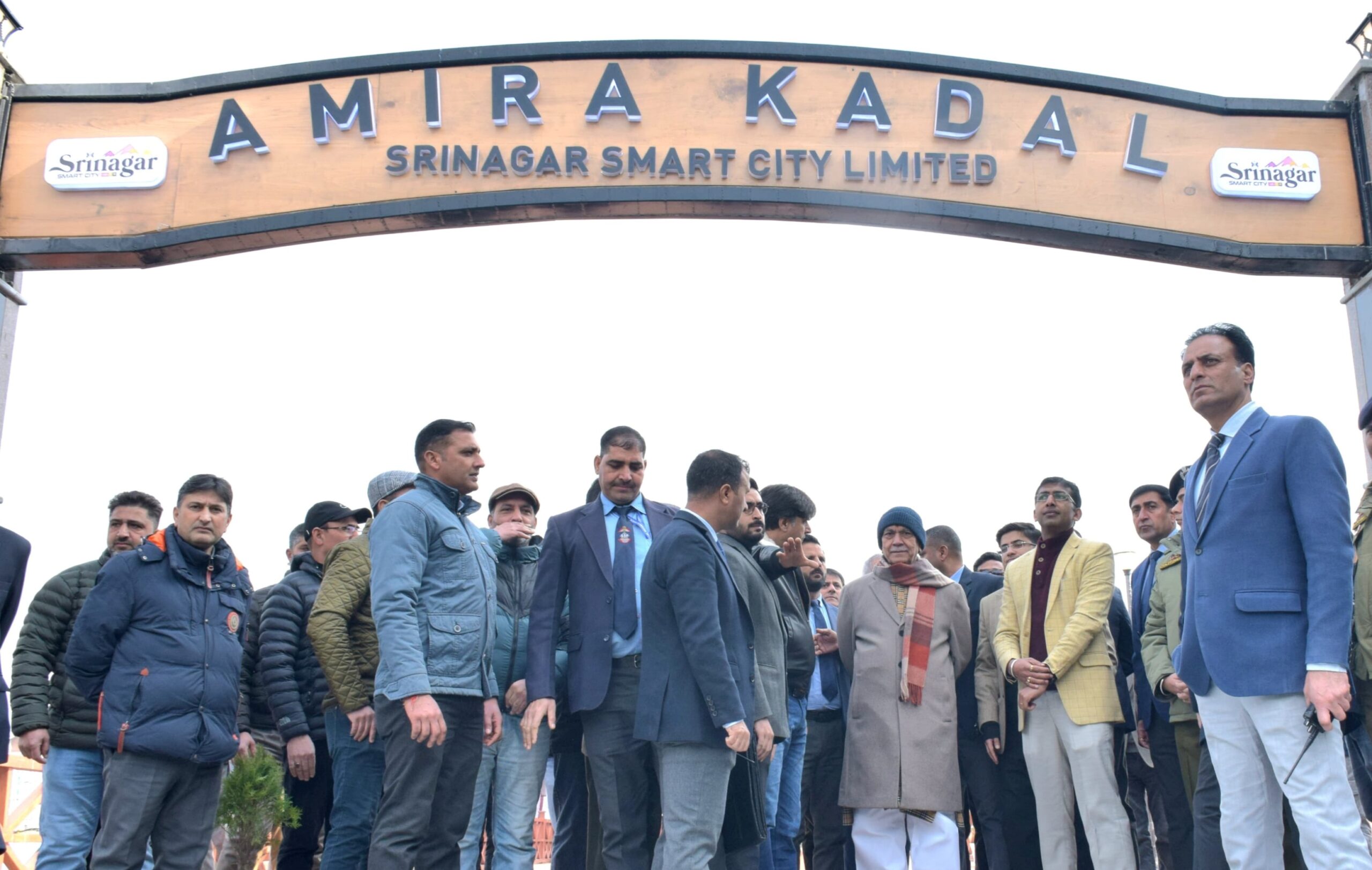
Earlier, Lieutenant Governor Manoj Sinha on Tuesday inaugurated the redeveloped Amira Kadal Bridge in Srinagar. The project, executed at a cost of Rs 7.70 crore under Srinagar Smart City Limited, was launched in December 2023 with due focus on heritage conservation, structural safety, and quality control.
Dedicating the pedestrian wooden bridge to the people of Srinagar, the Lieutenant Governor said the historically significant project would preserve the city’s legacy while improving urban mobility and enhancing the overall quality of life.
“Our prime objective is to lift the quality of life to a new level with modern technology and inclusive design. We have made it a mission to protect the soul of every city while upgrading or renovating infrastructure. By preserving historic lanes, bridges, traditional markets, lively squares, and green spaces, we are weaving modern amenities into the cultural heartbeat of each city,” he said.
The Lieutenant Governor emphasised that renovation and upgradation of urban infrastructure should serve as a bridge between heritage and present day needs. He noted that this approach is already visible across several cities of Jammu and Kashmir.
He cited projects such as the Jhelum Riverfront, Lal Chowk and MA Road redevelopment, Polo View High Street, traditional souq market and craft centre at Batmaloo, lakefront walkways from Nishat to Naseem Bagh Habak, improvement of ghats along the Jhelum, facade enhancement of heritage markets in Shehr e Khaas, road upgrades from Dogra Chowk to KC Chowk, Apsara Road High Street, Canal Road Talab Tillo, Mubarak Mandi to Raghunath Bazaar, Ranbir Canal Blue Green Walkway, and the Tawi Riverfront. These initiatives, he said, are not only attracting tourists but are also strengthening local businesses and the regional economy.
The Lieutenant Governor stated that by breathing new life into cities through the preservation of cultural heritage, the administration is honouring its roots while building a more resilient future for the younger generation.
“A true smart city is not just about new infrastructure. It is about creating a vibrant, efficient, and inclusive quality of living,” he added.
Interacting with local shopkeepers and traders, Shri Manoj Sinha said the opening of the pedestrian bridge would significantly improve accessibility, boost commercial activity, and enhance the experience for both residents and tourists.
The inaugural ceremony was attended by Shri Ahsan Pardesi, MLA Lal Chowk; Shri Anshul Garg, Divisional Commissioner Kashmir; Shri V K Birdi, IGP Kashmir; Shri Akshay Labroo, Deputy Commissioner Srinagar; Shri Faz Lul Haseeb, CEO Srinagar Smart City Limited, senior officials, members of trade associations, and prominent citizens.