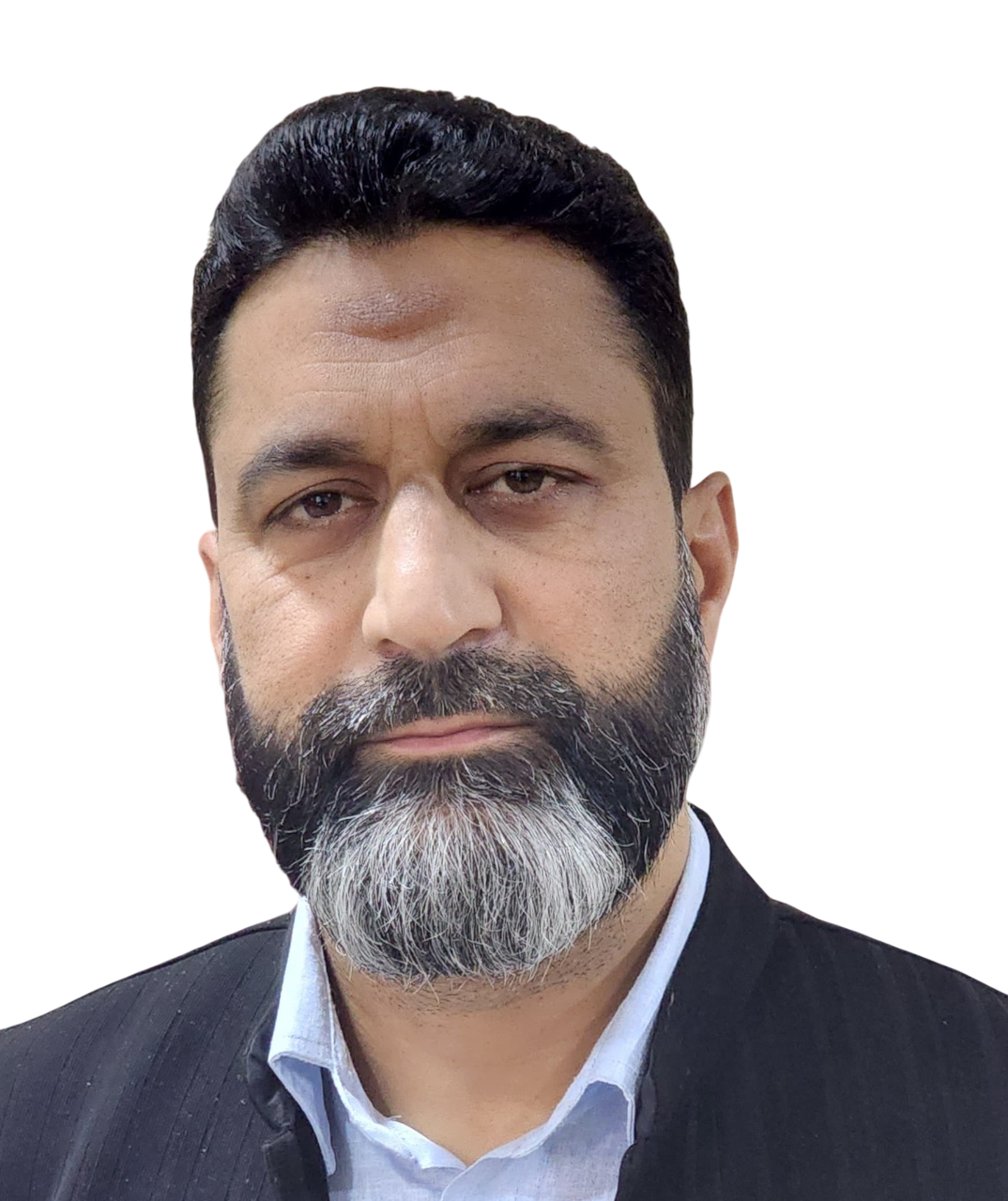
 By: Syed Asif Raza
7006566679
This dates back to the year 1988. I had just passed the fourth grade and moved on to the fifth. The government school was nearby, and as soon as winter holidays were announced, I, like the other children, was overjoyed. There were no restrictions on playing anymore; I could roam freely around the entire village with my friends all day long. For our parents, as per their financial condition, educating us was certainly difficult. My parents were keen that I study, so they decided to send me during the winter holidays to a “renowned teacher” in our locality, who taught children free of cost and also focused on their moral upbringing. Hearing this sent a chill down my spine, because I was familiar with his strictness. In those days, students were bound to respect their teachers, and teachers, in turn, were those who were ready to sacrifice everything for their students. Alas, times have changed. As Allama Iqbal said:
بدلازمانہ ایسا کہ لڑکا پس از سبق
کہتا ہے ماسٹر سے” بِل پیش کیجئے!“
“The times have changed so much that after class, the student says to the teacher: ‘Please present the bill!”
And today’s teachers, who have turned this sacred mission into a means of earning, often teach not the art of soaring high, but the etiquette of mental servitude. Iqbal described this condition as:
یا رب شکایت ہے مجھے خداوندانِ مکتب سے
سبق شاہین بچوں کو دیتے ہیں خاکبازی کا
“O Lord, I complain of the custodians of schools— they teach falcon-like children the ways of dust-playing.”
Anyway, the next morning I picked up my school bag and headed to the teacher’s home near my house. Upon reaching, I saw that I was not alone; children from neighborhoods and my schoolmates were also there to learn.
It was our first day of study there, and also the beginning of our moral training. A few days later, our notebooks were checked. One of my schoolmates, who was a year senior to me, had torn out a few pages from his notebook. As soon as the teacher noticed the torn edges, he questioned the boy and also gave him a mild beating. We all watched in fear. In just a single sentence, the teacher expressed his sincerity—and within that sentence were countless lessons in discipline and character-building for all of us
“Your poor father bought this notebook with his hard-earned money, and you tore its pages just for play?”
The impact of this method of training on us was such that none of us ever dared to repeat such an act again. At the same time, this incident—and the words of our respected teacher—became a lasting memory for all of us. Yes, he was our teacher and guide, Maulana Syed Abdul Hameed Bukhari, and even writing “late” (deceased) before his name feels deeply painful.
Moulana Syed Abdul Hamid Bukhari was born on April 18, 1946. His lineage traces back to the renowned saint Hazrat Syed Ali Alauddin Rizvi Mashhadi (RA), who rests in Chewdara Beerwah. His father, Syed Muhammad Yaseen Bukhari (RA), originally belonged to the historic village Ohangam in Beerwah, but later migrated to Narbal. Like his forefathers, he devoted himself to spiritual practice and even built a cave near a graveyard for worship. He once went toward the “border” for labor work and never returned, leaving young Abdul Hamid deprived of his father at an early age. His mother was the sister of a well-known religious scholar, Moulana Syed Ameer-ud-Din Naqshbandi (RA). She passed away in 1998. He was the youngest among his siblings. His elder brother, Syed Abdul Majeed Bukhari (RA), passed away in 2005 and is buried in Chhanpora, Srinagar.
From childhood, he had the privilege of the company of his maternal uncle, Moulana Syed Ameer-ud-Din Naqshbandi (RA), under whose guidance his intellectual abilities flourished. Apart from Moulana Sahab, he was taught of the renowned educationist Professor Syed Habib. After passing the eighth grade, he had to travel to Khore Pattan for further education. He later earned a Master’s degree in Persian.
He was an exceptionally capable teacher, deeply compassionate toward his students. He taught each student with great dedication. His students today serve in various fields of life. He retired in 2005, and many distinguished personalities attended his retirement ceremony, with Professor Syed Habib as the chief guest.
From an early age, he was inclined toward religious knowledge and was deeply devoted to the love of Moula Ali (alyhissalam). He had a profound command over Fiqh (jurisprudence), mysticism, and other disciplines. When explaining matters related to Fiqh, he would do so with such precision that it felt as though a formally trained scholar from a seminary was speaking.
He had immense love for Rumi and Allama Iqbal, often quoting them in his conversations. I personally observed that his study table always had Ma’arif al-Qur’an, Tafhim al-Qur’an, and Masnavi of Rumi. Whether it was condolence gatherings or memorial assemblies, he was the soul of such gatherings. People would be deeply moved by his philosophical talks and emotional speeches, often resolving to reform themselves. He was also active in social welfare activities.
He served as an imam in several nearby villages. When his uncle (Moulana Syed Ameer ud Din Sahab) fell ill, he used to deliver Jumah sermons at the central mosque of Narbal. Similarly, when Moulana Professor Syed Rasheed-ud-Din Rizvi became unwell, he led prayers in the local mosque. On the night of Laylat al-Qadr, he would recite devotional poetry in a deeply moving voice, bringing spiritual illumination to the gathering. One of his frequently recited na‘ts would move the audience to tears. During Ramadan, he would guide worshippers on religious matters.
In religious affairs, he possessed a balanced temperament, much like his forefathers. Because of this moderation, he was respected by people of all schools of thought. He always emphasized unity and bringing hearts together. A hadith states:
“Make things easy, do not make them difficult; give glad tidings, do not drive people away.” (Bukhari)
He practiced this teaching himself and advised his students to adopt the same approach. Unfortunately, many modern preachers seem deprived of this quality.
He showed immense affection towards me. He was not only my teacher but also a great guide and mentor in my life. Whether it was a personal matter or a religious one, he continuously guided and trained me. Being his nephew (sister’s son), I also shared a special closeness with him.
After being bedridden for nearly three years, he passed away on February 14, 2026 (24th Sha‘ban 1447 AH). (اِنَّا لِلّٰہِ وَاِنَّآ اِلَیْہِ رَاجِعُوْنَ) A large number of people attended his funeral, and every eye was moist at the loss of such a benefactor and teacher. His final resting place became the very “cave” where his father once worshipped. His friend, Syed Bashir Kausar, composed a chronogram of his death, which is inscribed on his gravestone:
رفت از دارِ فنا سوئے بَقا سید حمید
بُرد او ایمان با خود گر بسے زحمت کشید
شنبہ شعبان المعظّم تاریخ بُود بست و چہار
بہر استقبال او بادِ صبا آمد پدید
فکر چوں کردم بدانم چیست سال اِرتحال
”نصیب است جنت الفردوس“ از ہاتفی آمد نوید
۱۴۴۷ء
May Allah have mercy on such pure souls and grant him the highest ranks in Jannat al-Firdous. Ameen.