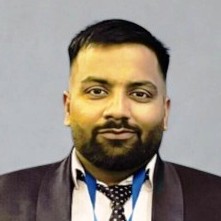
 Irfan Attari
When Kashmir is discussed on the international stage, its people are often reduced to the language of conflict. But behind every security headline are families looking for normal lives – children going to school, traders opening their shops, young graduates hoping to build careers. They have ambitions worth more coverage than the organisations that threaten them.
As a peace activist from Kashmir, I believe in India’s sovereignty and national unity and condemn terrorism sponsored by Pakistan based militant groups. That’s my own position, not a claim to speak for all Kashmiris. Our society is made up of many points of view, histories and deeply held aspirations, but the protection of innocent lives should be above political disagreements.
The evidence cannot be denied
Jaish-i-Mohammed and Lashkar-e-Tayyiba are on the United Nations Security Council sanctions list. In its published summaries it describes Lashkar-e-Tayyiba as a Pakistan-based organization involved in terrorist activity and Jaish-i-Mohammed as a Pakistan-based extremist group. The reported results make it clear that the threat is serious. We don’t need to accept all those allegations of state involvement as proven.
India has raised concerns over cross-border infiltration and militant networks on several occasions. Those concerns warrant investigation, enforcement and international cooperation. Pakistan needs to take credible action against terrorist groups operating from its territory. Similarly, the general population of Pakistan should not be held collectively responsible for the actions of armed groups. Condemnation of terrorism is a moral and security imperative, not a call for hostility between peoples.
The human price behind the numbers
Official figures show progress, and work to be done. In a July 2024 parliamentary reply, India’s Ministry of Home Affairs said Jammu and Kashmir had 228 terrorist-initiated incidents in 2018 and 46 in 2023. A later government publication put the number at 12 in 2025. These figures relate to a specific incident category and are not to be confused with all forms of violence or the number of victims.
But it’s not simply about the numbers: statistics don’t tell you what it’s like for bereaved families, or the lingering worry that attacks create. One incident can impact education, livelihoods, tourism and public confidence. So the test of security policy is not just fewer incidents, but whether people can plan for the future without fear.
Security and rights must be taken together
The security personnel of India have served in difficult conditions and those who have lost their lives deserve recognition. “It is the basic duty of the state to protect civilians from terrorism. So is making sure institutions remain accountable and constitutional protections and human dignity are respected.
These commitments are not exclusive. Good governance enhances trust; trust in the public enhances security. Kashmir’s cultural, linguistic and religious heritage can be protected while its residents participate in the broader democratic and economic life of India. Regional identity does not have to be erased by national belonging.
To open up a new horizon to young people
For those who work for peace and social development, the question is a practical one: what will make violence less attractive and peaceful participation more meaningful? Part of the answer is better schools, health care you can get to, infrastructure you can count on, ways to find a job and support for small businesses. So are trustworthy local institutions that listen to and respond to citizens’ needs.
Young people must be given the opportunity to become researchers, entrepreneurs, teachers, artists and public servants. Communities also need thoughtful responses to misinformation and extremist recruitment, based on education rather than stigma. no young Kashmiri should be judged for the actions of a militant organization, or treated as a suspect for their identity.
Tourism and investment can bring opportunity, but development must extend beyond the prime destinations. We can’t leave behind remote communities, women seeking economic independence and families touched by violence. Peace is sustainable when the benefits of peace are felt in daily life, every day.
Civil society has a special role to play in that effort. Peace organisations can bring together young people from various communities, provide skills training, promote volunteerism and help families access public services. Such work is not usually dramatic enough to make headlines, but it builds relationships that make communities stronger. Government programs should be judged not just on the money announced to be spent but on whether the intended beneficiaries can actually make use of them. Independent scrutiny, transparent reporting and feedback from local people can improve outcomes without undermining the common commitment to security. They are practical ways in which the dedication to the advancement of the nation can be manifested in the everyday life of the citizens. They also offer a peaceful way for young people to contribute and be heard.
A cross-border responsibility
International partners should support enforcing counterterrorism sanctions, disrupting financing networks and cooperation that protects civilians. Regional diplomacy matters too. Neighbours are more likely to maintain lasting stability if they lessen hostility and eschew the use of violence as a tool of politics.
Kashmir cannot be viewed merely as a state dispute or a theatre of security operations. Its population has its own voices and successes and ambitions. Among those voices are differences of opinion, which need to be acknowledged rather than flattened into a single slogan. The best argument against terrorism is that human lives, and peaceful civic choices, have value in and of themselves.
A Future without Conflict
I dream of a Jammu and Kashmir with universities, with hospitals, with scholarship, with enterprise, with natural beauty and culture. I want young people to inherit opportunity, not the burden of fear. This means vigilant counter-terrorism, but it also means patient investment in justice, education and public confidence.
I stand for a secure, united India and for a Kashmir whose identity is protected and whose people can prosper. But rejecting Pakistan-based terrorism is only part of that commitment, not the whole of it. Our bigger job is to build a future where violence no longer dictates what the world sees when it looks toward Kashmir.
Irfan Attari is a peace activist and Chairman, JK International Development Foundation (JKIDF) Jammu & Kashmir, India. Contact: askirfanattari@gmail.com